One of the key components of President Trump’s policy agenda has been immigration reform. White House data indicates that the United States experienced net negative migration in 2025 for the first time in more than 50 years, driven in part by increased deportations and enforcement efforts under the Trump administration. Supporters of these policies argue that they have strengthened public safety and restored legal order, while critics point out aggressive tactics and accuse Immigration and Customs Enforcement (ICE) of racial profiling and excessive force.
Tensions over federal immigration enforcement intensified nationwide after a controversial operation in Minneapolis, part of what has been called “Operation Metro Surge”, during which two U.S. citizens, Alex Pretti, a 37-year-old ICU nurse, and Renée Good, a 37-year-old poet, were fatally shot by federal agents. The deaths sparked widespread protests and judicial and legislative challenges, with opponents likening ICE to oppressive forces like Hitler’s Gestapo and demanding accountability.
Here in Walla Walla, where local politics are deeply split and the immigrant community is significant, reactions have mirrored the national divide. On Jan. 30, more than a hundred residents gathered for a protest against ICE actions as part of nationwide demonstrations. Passing motorists were reported to have responded with middle fingers and thumbs-down gestures toward the protesters.
Against this backdrop, five Walla Walla residents were interviewed to share their perspectives on ICE. Their responses reflect a wide range of lived experiences, beliefs and emotions, offering a snapshot of how this debate is unfolding within the community.
If you could describe your feelings towards ICE in one word. What would it be?

Justin.
Parent, volunteer and youth sports coach:
Concerned.
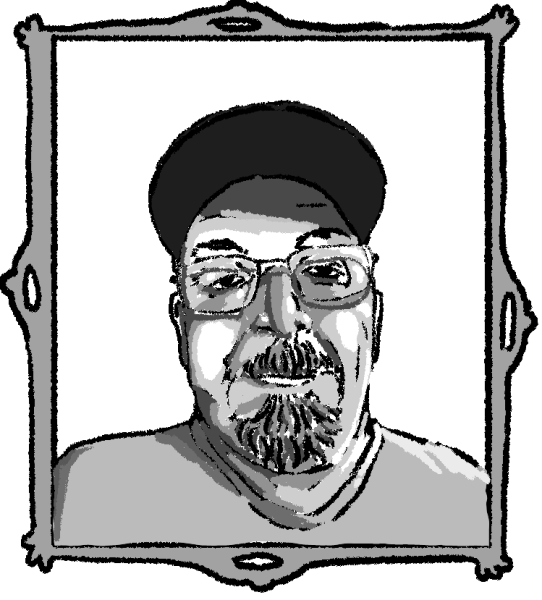
Marshall.
Born and raised in Eastern Oregon, father of 2, grandfather of 5:
Necessary.

Diego*
College student, immigrant:
Disgusted.
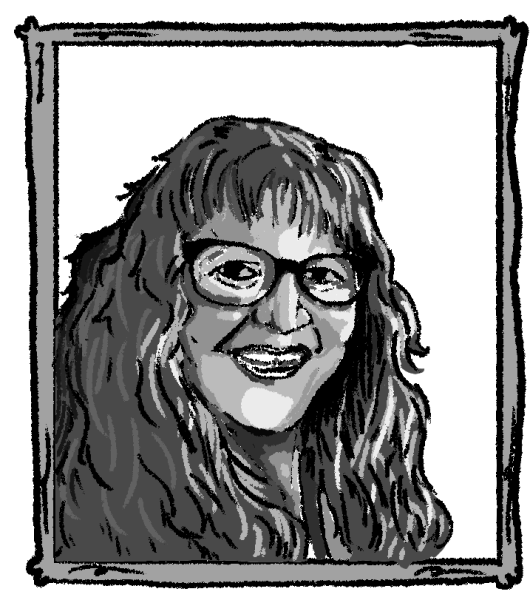
Dawn.
Retired medical receptionist:
Necessity.
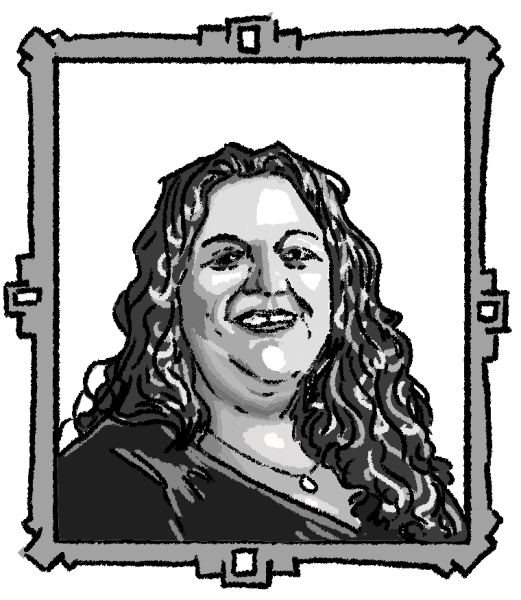
Heather.
Married mother of 2 and a professional working in nonprofit work:
Mismanaged.
Illustrations by Avery Hargrove.
How does who you are (professionally or personally) influence the way you think about ICE?
Justin: As a parent and someone focused on community stability, I tend to look at how public policy decisions affect everyday life — schools, child care, housing and whether people feel safe engaging with local institutions. Professionally, I value trust and accountability, and I think those same principles matter in public policy and enforcement.
Marshall: It doesn’t.
Diego*: Characteristically speaking, I fit the criteria for the type of person ICE has been targeting. I’m not inclined to have positive feelings towards them.
Dawn: Profoundly. In my personal and professional life, following rules for protection is very important. Our world hinges on compassionate order and laws. ICE is there to make sure that laws are kept and followed, and that citizens are safe.
Heather: Immigration policy isn’t theoretical in my household, it’s personal. When my son was 10 years old, he lost his father — not to death, but to deportation. Not many people know this, but my son Isaiah’s biological father was deported at the age of 28 after spending nearly his entire life in the United States. He was brought here at just eight years old and lived in this country for 20 years. He was eligible for DACA (Deferred Action for Childhood Arrivals) until he began making poor choices and had multiple run-ins with the law — and for that, he faced serious consequences: deportation. As the mother of a child who lost his father to deportation, this issue is not abstract to me.
I believe it’s important for both Republicans and Democrats to focus less on why the Department of Homeland Security is doing what it’s doing, and more on how it’s being done. The real issue isn’t whether deportation exists — it’s whether it’s carried out in a way that upholds due process and human dignity. Legal deportation is part of maintaining a functioning immigration system and contributes to economic order by upholding consistent rules that allow markets, employers and communities to function predictably.
Previous administrations have deported millions upon millions of people, yet our country has not experienced this level of civil unrest. Why is that?
The rhetoric of the current administration pushes illegal immigrants to be viewed as less than human, oftentimes calling them alien… and that is not ok. For example, like Isaiah’s father, many illegal immigrants were brought here as children. Their rocky paths were paved long before they were ever handed a chisel to shape it themselves. Some grew up to make poor choices, while others built resiliency, kept their heads down, worked hard and contributed more to this country than they have taken. Some were able to pursue legal documentation, while others lacked access to the information, resources or support needed to do so. This is just one example of the nuance worth considering when discussing and enforcing immigration policy. This is why one size does not fit all and above all else, we need to put humans first.
Whether you are Republican or Democrat, I urge you to pause and take a step back. Instead of reacting with blind rage or getting lost in the weeds, let’s respond thoughtfully by examining our nation’s policies through a critical lens, identifying systemic weak spots and advocating for meaningful change.
Long story short: a nation can enforce its laws and preserve its humanity at the same time. Deportation itself isn’t what destabilizes a country—fear, inconsistency and dehumanization do. We the people. If we want a system that works economically, socially and morally, we have to stop reacting to the noise and start demanding policies that are firm, fair and grounded in dignity for everyone affected.
When you first heard about what’s been happening with ICE in Minneapolis, what was your immediate reaction?
Justin: My first reaction was concern about the broader ripple effects. When enforcement actions appear aggressive or poorly coordinated, fear can spread quickly — not just among undocumented individuals, but across entire communities. That kind of fear undermines trust in institutions that communities rely on every day.
Marshall: Stop interfering and you won’t have unintended consequences.
Diego*: Not surprised, this regime has seemingly zero boundaries.
Dawn: Shock. Shock in many ways. First, I was shocked and saddened that the incident occurred at all. Sad that it came to what it did. Sad that people confuse peaceful demonstrations for obstruction. Sad that lethal force was necessary. Sad that escalation happened so quickly or at all.
Heather: Shock and confusion. I heard that immigration concerns were starting to ramp up in Minneapolis due to accusations of childcare fraud so I knew it was likely that the federal government might intervene. When I heard that Renee Good was shot, I was on a work call with some colleagues from Ohio and we all took a moment to mourn the current state of our nation.
Before the Minneapolis situation, what did you think you knew about ICE and its role in the U.S.? Has that view changed? If so, how?
Justin: I understood ICE as a federal agency tasked with immigration enforcement. Events like this have highlighted how enforcement is carried out matters just as much as what the mission is. My view has shifted toward a greater awareness of how enforcement tactics can unintentionally destabilize communities if trust and coordination are lost.
Marshall: I thought its role was to remove illegal immigrants.
Diego*: I knew that ICE was already an area of contention in previous administrations. Before this current administration took office, I had a neutral view of the agency. But now with the ramped-up enforcement and unjustified murders, my opinion of them is very negative.
Dawn: Not a lot, other than the role ICE plays in our country. Didn’t see much of them in the news, etc. My opinion of them hasn’t changed.
Heather: As I said in my previous answer, I have personal experience with ICE. My son’s father and I dated through high school and I got pregnant right after graduation. We separated when my son was two and then I met my current husband. I remember the day I was notified that my son’s father got deported and I immediately started to grieve for my son and his father. I had to leave early from work and took a couple days off to care for my son.
What have you seen or heard in national or local media about these events in Minneapolis, and how has that shaped your impression of ICE?
Justin: Media coverage has emphasized heightened enforcement actions and the tension they can create at the local level. That coverage reinforced my concern that when enforcement lacks transparency, clear communication, proper training and execution, it can erode public confidence — even among people who generally support the rule of law.
Marshall: I have seen a lot of hype to protect people that broke the law to come here and in some cases break the law when here as well. My impression of ICE is that they are people following orders of their job. They are working, plain and simple.
Diego*: I’ve seen the murders, the brutality and the unwavering support they are receiving. I view the agency for what it is, and that’s a fascist police force attempting to ethnically cleanse the nation.
Dawn: My exposure to the recent ICE events has come through social media and some news. It is all over almost all platforms I watch. Some slant conservative and some slant liberal. I listen to both sides, but almost always come back defending the role of ICE. The situation in Minneapolis was really the first major event with ICE that I saw. I don’t delve deeply into political issues, but that one was pretty bad. I wish that ICE had not taken such a lethal stance, but yet the woman had no right to actively interfere and go against the demands of the ICE authorities while they were actively doing their job. That is not the way to change laws. I can see how the ICE agent felt that she was trying to run him over. He was right in front of her car and she accelerated. That was a foolish thing to do. Sad and foolish. She could easily have done as asked.
Heather: I’ve watched/read quite a bit, analyzing the videos that showed the horrible events leading up to the death of Pretti and Good. Our nation is starting to spiral out of control and things are getting scary.
What concerns (if any) do you have for communities like Walla Walla?
Justin: In smaller communities like Walla Walla, schools, child care providers, housing services and local law enforcement are already stretched thin. If families become afraid to engage with those systems, it impacts everyone — not just immigrants. Community safety depends on trust, and once that trust is damaged, it’s hard to rebuild.
Marshall: I really don’t have any concerns for Walla Walla, it is a fairly small community [with] a small fraction of illegal immigrants in it.
Diego*: With Walla Walla having a fairly substantial Latino community, I worry that ICE will begin to take action here locally.
Dawn: I don’t want our community to become a city in chaos. My concern is that liberal individuals will create situations where chaos and lack of order become prevalent. Peaceful protests are one thing, but I’m concerned that escalation will occur. Just today we drove past a demonstration by the Marcus Whitman Hotel and one individual almost caused a car accident because he was standing in the street and a driver could not see him as he was coming around the corner. He slammed on his brakes and barely missed him. This young person still didn’t leave the street. He was not on the sidewalk. Who is at fault here? The demonstrator. He was clearly obstructing. That is not what I want for our community. To stand on the sidewalk with a sign is different.
Heather: As for Walla Walla, I am nervous due to the fact that we have a large migrant population. I work closely with migrant families through my work and I am nervous for them. I may not be fluent in Spanish but I am fluent in empathy, which is universally understood no matter what language you speak.
Have discussions about this topic changed how you talk with friends, family or neighbors? What perspectives have surprised you?
Justin: Yes. What’s surprised me most is how much common ground exists. People may disagree on immigration policy, but many agree that fear-based approaches that disrupt families and weaken community trust don’t serve anyone well. Those conversations have been more nuanced than national rhetoric would suggest.
Marshall: Yes, I am surprised that many are upset about trying to clean our country up. It’s important that we know who is here, everyone here.
Diego*: The way I talk with my friends, family and neighbors has not changed. Nearly everybody I know does not support ICE, but I’ve been surprised by the support for ICE I have seen online in Walla Walla community pages.
Dawn: Absolutely. If you voice your stance, especially if you are supportive of ICE, you will likely get hatred and possibly violent kickback. I no longer engage others in political topics whatsoever. I find that to be sad. I feel that everyone should be able to peacefully discuss their views without fear of escalation or hatred. And the perspective that surprises me so vastly is the absolutely dripping hatred from the liberals. Absolutely toe-curling hatred. It’s like the devil is standing in front of you. That is my concern.
Heather: My two mottos in life are, be curious, not furious to better understand the other person’s point of view and demand respect in a respectful way. I don’t mind engaging with those who have differing views than I do as long as the conversation stays productive and thoughtful in nature.