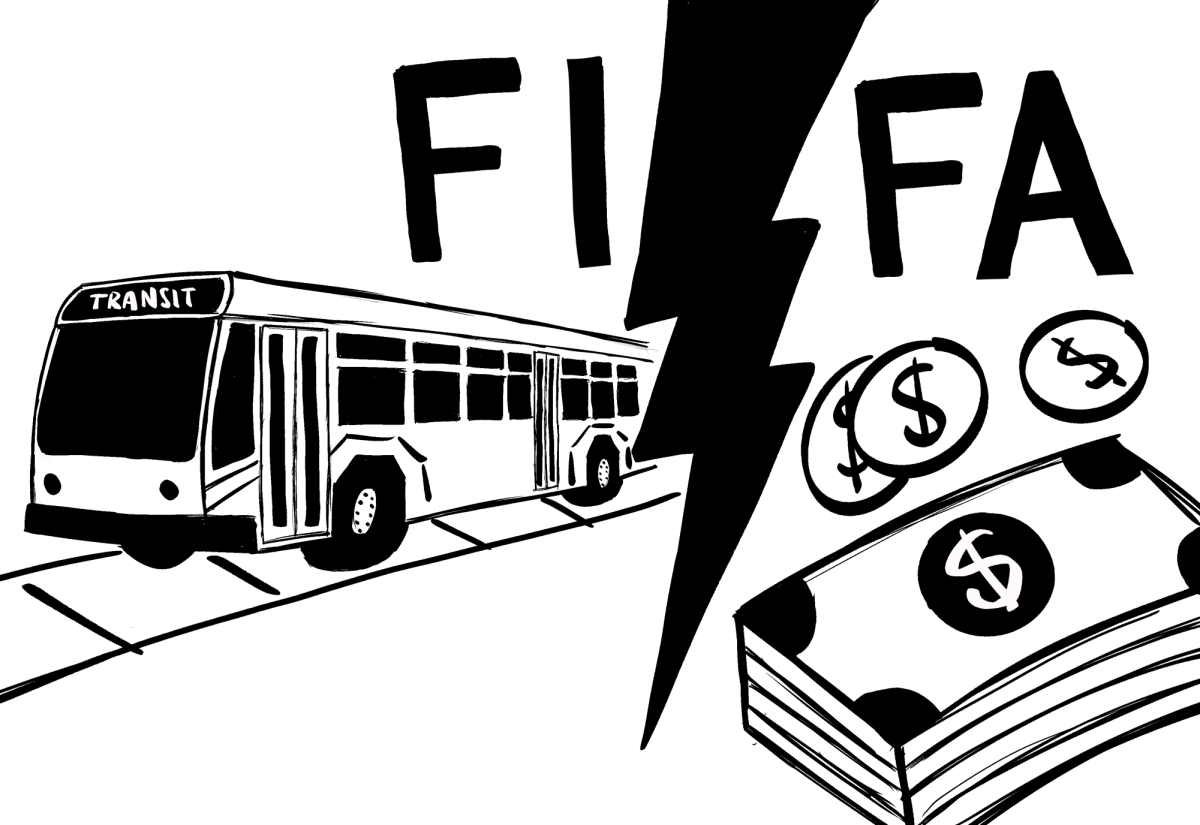
On June 11, Canada, Mexico and the United States will convene preeminent soccer teams from around the globe for the FIFA World Cup, the world’s biggest sporting event. 48 countries will participate — marking an expansion from the previous 32-team format — with Cabo Verde, Curaçao, Jordan and Uzbekistan making their debuts. This expansion will not only integrate more teams but also more fans worldwide into an already massive cultural and commercial phenomenon. Although this quadrennial event has generated anticipation for teams and fans alike, it has also created conflict. As New York and New Jersey prepare to host the World Cup at MetLife Stadium, tension has risen between the Governor of New Jersey, Mikie Sherrill, and FIFA regarding increased NJ Transit prices for World Cup games.
MetLife Stadium, located in East Rutherford, New Jersey, is the only stadium shared by two NFL teams — the New York Giants and the New York Jets. As a high-capacity venue that seats up to 82,500 people, MetLife has hosted major sporting events like the Super Bowl — and soon, the 2026 World Cup. Located just outside of New York City, the stadium is the perfect spot for fans to access public transportation, such as the NJ Transit, without the hassle of heavy traffic. For the 2026 World Cup, public transportation will prove essential for fans attending MetLife; the chances of finding parking spaces are low due to fan villages and shuttle buses.
The influx of commuter traffic may cause trouble for regular NJ Transit commuters. To manage huge crowds while maintaining security, New York Penn Station is set to partially close as it restricts train access for NJ Transit commuters for approximately three to four hours before and after the eight World Cup matches at MetLife Stadium. Penn Station, already one of the busiest transportation hubs in the nation, will be expected to transport 40,000 soccer enthusiasts on each match day.
Despite this lofty expectation, NJ Transit is committed to providing a seamless experience for fans and residents alike, according to its President & Chief Executive Officer Kris Kolluri.
“While we are ready to deliver a seamless travel experience for those riding with us on match days, we have been equally focused on ensuring our everyday customers have a multitude of travel options if they rely on NJ Transit for essential travel during key time periods before and after the match,” Kolluri said
The World Cup implemented new security protocols after fans stormed Hard Rock Stadium during the Final Copa America match in Florida in 2024, ensuring that extra precautions are taken during large soccer tournaments. But NJ Transit would be hard-pressed to transport its regular commuters and 40,000 soccer fans while completing the additional safety protocols, all without safety risks.
Governor Sherrill announced at a press conference on April 15 that, although N.J. was more than ready to host the World Cup given its economic benefits for the community and local business, hosting would not come at the expense of taxpayers and commuters. Governor Sherrill later vowed on April 17 that if FIFA did not chip in to cover the estimated $48 million cost of safe and efficient transportation, fans would bear that cost themselves.
Following this statement, Transit announced that, up from the typical price of $12.90, the price of a round-trip ticket to MetLife Stadium would be $150. With bus rides included for a round-trip ticket costing $80, fans would be unable to avoid paying for transportation.
Governor Sherrill later defended her decision to increase round-trip prices for soccer fans by reiterating the importance of FIFA contributing to transportation costs.
“As I have said repeatedly, FIFA should cover the cost of transporting its fans,” Sherrill said. “If it won’t, we will not be subsidizing World Cup ticket holders on the back of New Jerseyans who rely on NJ Transit every day.”
FIFA was surprised by Governor Sherrill’s decision, stating that transportation issues were well discussed in advance before the World Cup. A spokesperson for the organization said that host cities had been well informed and agreed to provide free or at-cost transportation to fans during all matches.
“The original FIFA World Cup 2026 host city agreements signed in 2018 required free transportation for fans to all matches,” FIFA said. “Recognizing the financial strain this placed on the host cities, back in 2023, FIFA adjusted the host agreement requirements across all host cities as follows: All match ticket holders and accredited individuals shall be able to access transport (public or additional transport) at cost to allow travel to stadiums on match days.”
Governor Sherrill continues to stand firm on representing New Jersey without hindering resident consumers or the local economy.
“This is about striking the right balance,” Sherrill said. “We will showcase New Jersey on the world stage while protecting our residents, supporting our workforce and making sure the economic upside event is felt in communities across our state.”
Following Governor Sherrill’s dispute with FIFA, Democratic members of Congress from New York and New Jersey joined in writing a letter to FIFA President Gianni Infantino urging the organization to subsidize transit costs. FIFA has yet to reply, leaving the New Jersey government and fans to wonder what the next development will be.