As fire season winds down in the Northwest, firefighters and land managers take advantage of the cooler, wetter weather to begin preparations for the upcoming summer. Fall marks the beginning of the burning season, when firefighters intentionally set forests ablaze, starting small, low-intensity forest fires in the hopes of cultivating healthier and more resilient ecosystems. These fires, known as prescribed burns, are one of several forest management strategies employed by many federal and state agencies to reduce wildfire risk.
Recently, funding shifts have caused concern among Washington’s public officials about the future of wildfire prevention work in the state. In 2021, state lawmakers approved House Bill 1168, which committed $500 million over eight years to the state’s Department of Natural Resources for wildfire preparedness and response. Following a state budget shortfall earlier this year, officials nearly halved the agency’s funding, reducing it from $115 million in the previous two-year budget to $60 million for the next two years.
Last month, in a letter to the state’s Office of Financial Management Director K.D. Chapman See, public lands commissioner Dave Upthegrove requested an additional $60 million in funds for wildfire prevention, along with an additional $44.8 million to be allocated for wildfire response in the 2026 fiscal year. Upthegrove proposed that these funds could be sourced from the state’s Climate Commitment Act funds, thereby reducing pressure on the state’s already tight general fund.
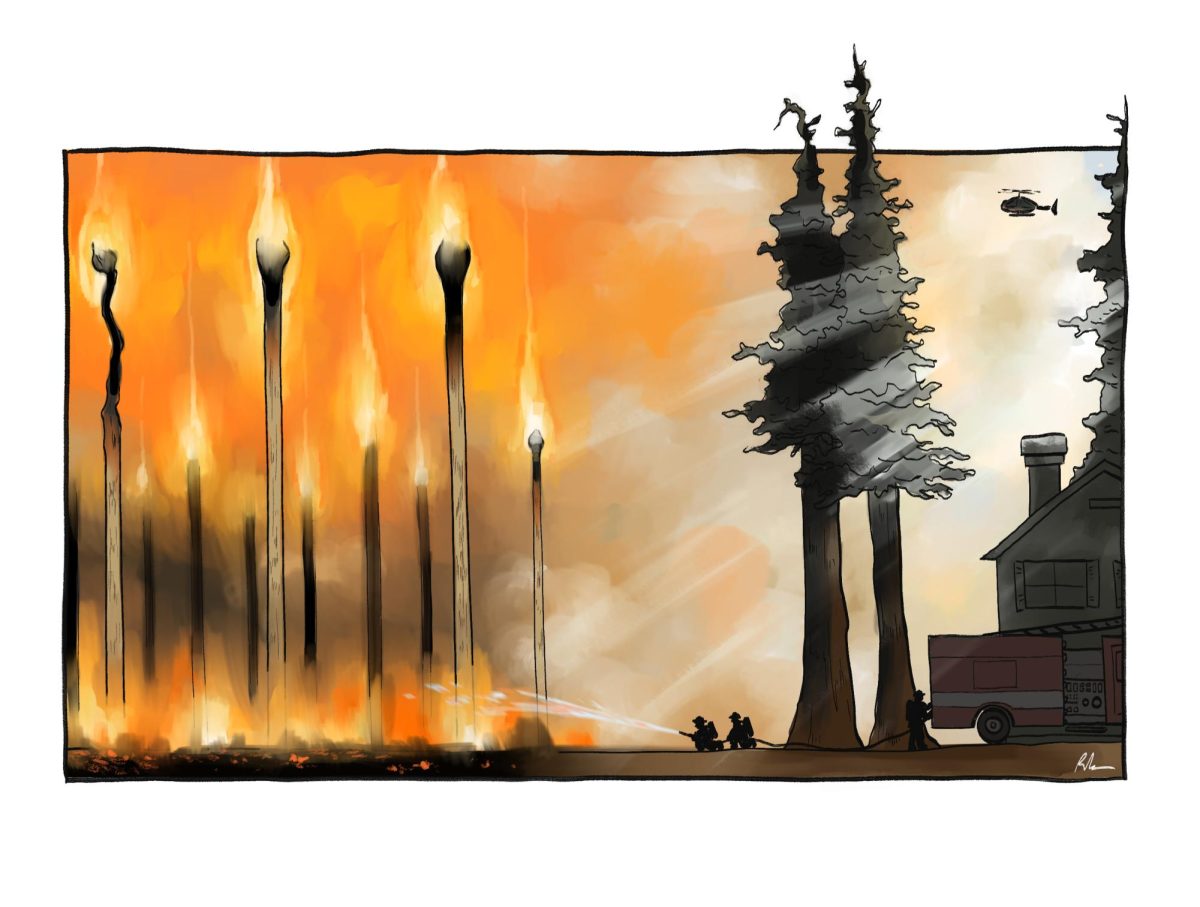
The additional $60 million would only be used for wildfire prevention and fuels treatments – not fire suppression – an important tool in proactively managing wildfire activity. Wildfire response costs often far exceed the costs of prevention. In the 2025 fire season, suppression costs the state approximately $93 million, excluding costs for ongoing fire response. Prevention measures and fuel treatments are proven to reduce fire severity and lessen impacts from catastrophic fire events, and in the long term, are often a more cost-effective approach to management overall.
Upthegrove’s request comes at a pivotal moment. Historically, fires have been less common in the Pacific Northwest due to the cooler, moister climate west of the Cascade Range, but evidence suggests that this may be changing. A report published by the University of Washington noted that longer, drier summers may lead to an increased frequency and severity of wildfires in these areas. Just this summer, the human-caused Bear Gulch fire burned over 20,000 acres in the Olympic National Forest – the largest wildfire in the Olympic Peninsula since 1951.
East of the Cascades, the need for fuel treatments is even more apparent. According to the report, lower-elevation dry forests dominated by Douglas-fir and Ponderosa pine are most at risk of consequences to forest composition and health as fire frequency and severity increase.
Ryan Rodruck, firefighter and public information officer for the DNR’s Eastern Washington office, spoke about the need for wildfire prevention and fuels treatments in the region.
“Washington is currently in a forest health crisis. Addressing many of these forest health issues using tools like thinning and prescribed burning also serves as a preventative measure in the event of a fire,” Rodruck said. “Removing and reducing the available fuels on the ground prevents the likelihood of severe, catastrophic wildfires that can harm forests and communities.”
Rodruck stressed the importance of continuing prevention projects.
“There are still a great deal of acres within the state that DNR has identified that are going to require treatment. The more resources we can dedicate towards performing those treatments, the better the outcome is going to be both from the standpoint of the health of a forest and the forest’s ability to weather catastrophic wildfire,” Rodruck said.
Most of the wildfire prevention work carried out by the DNR is focused on central and eastern Washington, including the Blue Mountains in the Walla Walla Valley. The agency’s 20-Year Forest Health Strategic Plan specifically addresses the need for improved forest management in the region. According to the publication, 2.7 million acres of forest in this region are unhealthy and in need of intervention. Lapses in funding could significantly slow progress toward the plan’s goals, influencing outcomes both before and after catastrophic fire events.
Alissa Cordner, assistant professor of sociology and volunteer wildland firefighter, spoke about the need for wildfire mitigation on a national scale.
“I think there is widespread agreement among fire professionals, natural resource managers and even among decision-makers, that there is too much fuel on the ground – whether that is in the wildland urban interface, in and around homes and infrastructure or in watersheds that haven’t burned for a very long time. There’s growing agreement that using fuel mitigation in combination with prescribed fire and other strategies to get fuel load off the ground is essential to reduce risk to communities and other values that we care about,” said Cordner.
Dr. Cordner went on to discuss the social considerations that influence wildfire prevention projects.
“In the United States, not enough mitigation work is happening. There are various understandings of how the work can be done as concerns exist about smoke exposure from prescribed fire, particularly for communities that may have preexisting health vulnerabilities. [As a result] there is still quite a bit of debate between decision-makers and the public about how this work should be carried out,” Cordner said.
Land managers face numerous challenges in effectively implementing fuel treatments. Beyond cost, considerations regarding air quality and agency capacity constraints drive the need to prioritize certain areas. Additionally, researchers emphasized the need for fuel treatments where they are most impactful: areas where climate shifts are most pronounced, south-facing slopes, high-value habitats and high-risk locations, such as the wildland-urban interface.
Partnerships with local landowners are a valuable tool for agencies like the DNR. Most wildfire prevention work is carried out on public lands, leaving many private lands vulnerable to catastrophic fire. Locally, the Walla Walla Conservation District, in collaboration with other local agencies, aims to assist landowners in maintaining forest health through cost-share programs that benefit the community.
Annie Byerley, District Manager, offered some insight about these programs and the district’s ability to fund similar initiatives as budget considerations shift.
“Following large fires in 2015, Walla Walla Emergency Management pursued a grant to fund a partnership between Walla Walla County Fire District #4 and Washington State Penitentiary work crews. The fire district would conduct home assessments on properties bordering the Mill Creek watershed to identify potential risks, and then the work crews would address those risks. That project quickly gained a lot of traction, but funding eventually ran out,” said Byerley.
Currently, there is a funding gap for this partnership. While state funds available for the DNR would not be available for the Walla Walla Conservation District, Byerley indicated that prioritizing funding for wildfire prevention in general would likely serve to benefit local organizations and communities.
Byerley also outlined the reasons community partnerships are so important – without cost-share programs, many landowners are unable to manage forested lands effectively, leaving them susceptible to harm in the event of a fire.
“They [local landowners] are an aging demographic, so they just don’t have the physical capacity to do the work, and there’s an income restriction as well. It’s kind of a double whammy for landowners here in our foothills,” said Byerley.
Many of these properties run adjacent to the Mill Creek Watershed, Walla Walla’s principal source of water. The DNR has designated the Mill Creek area as a priority landscape for wildfire prevention work due to its high need for fuel treatment. Fires have been suppressed in the watershed for nearly a century, resulting in dense and unhealthy forests surrounding the area. The agency recommends treating an estimated 54,000 – 74,000 acres to return the forest to a resilient condition. Approximately 34% of the area is owned by small private landowners, with the DNR maintaining ownership of only 10% of the land, emphasizing the need for community-based wildfire prevention strategies.
Forest management and wildfire prevention funding support not only ecosystem health, but also have direct impacts on community safety, environmental stability and long-term economic resilience as fires grow more frequent and intense. Prioritizing forest health in the Northwest is more important than ever as climate change impacts intensify and the cycle continues.