Whitman recently announced that starting in the Fall of 2026, students will be able to pursue a new interdisciplinary Concentration in Public Health along with their major studies. The college also announced the forthcoming addition of Dr. Jennifer Kue, Whitman’s first Professor of Public Health, to lead the program.
Public health is a broad field, encompassing areas of study such as epidemiology, biostatistics, health education, environmental health, health policy and more. As such, the majors of these future Public Health students can stretch from Biology to English to Politics or anywhere in between. Pursuing the concentration doesn’t require a future in healthcare or medicine, although the program can be beneficial for students pursuing these careers.
In 2023, the Provost approved funding for a committee to develop a program in public health. This group was made up of faculty members from across many disciplines in both the sciences and the humanities, in addition to Kimberly Mueller, who has served as Whitman’s Director of Health Professions Advising for over a decade. The team examined public-health-centered, Independently Planned Majors crafted by students through the years, referred to accredited programs at schools across the country and even spoke with faculty members at those institutions.
An important step in the Public Health Concentration’s formation was when the committee hired a new faculty member to support coursework and research. Both members of the Politics and Economics departments as well as students with demonstrated interest and experience in public health aided the committee in their candidate search.
The outstanding candidate was Dr. Jennifer Kue, who currently works as an Associate Professor at the University of South Florida’s College of Nursing. Dr. Kue, a first-generation college student, is Hmong American. She came to the United States from Laos as a child refugee. This background shaped her interest in public health and continues to inform her nearly three decades of experience in the field.
“My entry into public health started with running a breast and cervical cancer screening program for refugee and immigrant women in Portland, Oregon. That experience really grounded me; it taught me valuable lessons about meeting communities where they are, building relationships with them, health literacy, health promotion and research. I partnered with community leaders and organizations, state and county health departments and academic researchers, then began attending public health conferences. Being at those tables showed me how interconnected everything is and how it shapes whether people live healthy lives. These experiences are what drew me into public health,” Dr. Kue said.
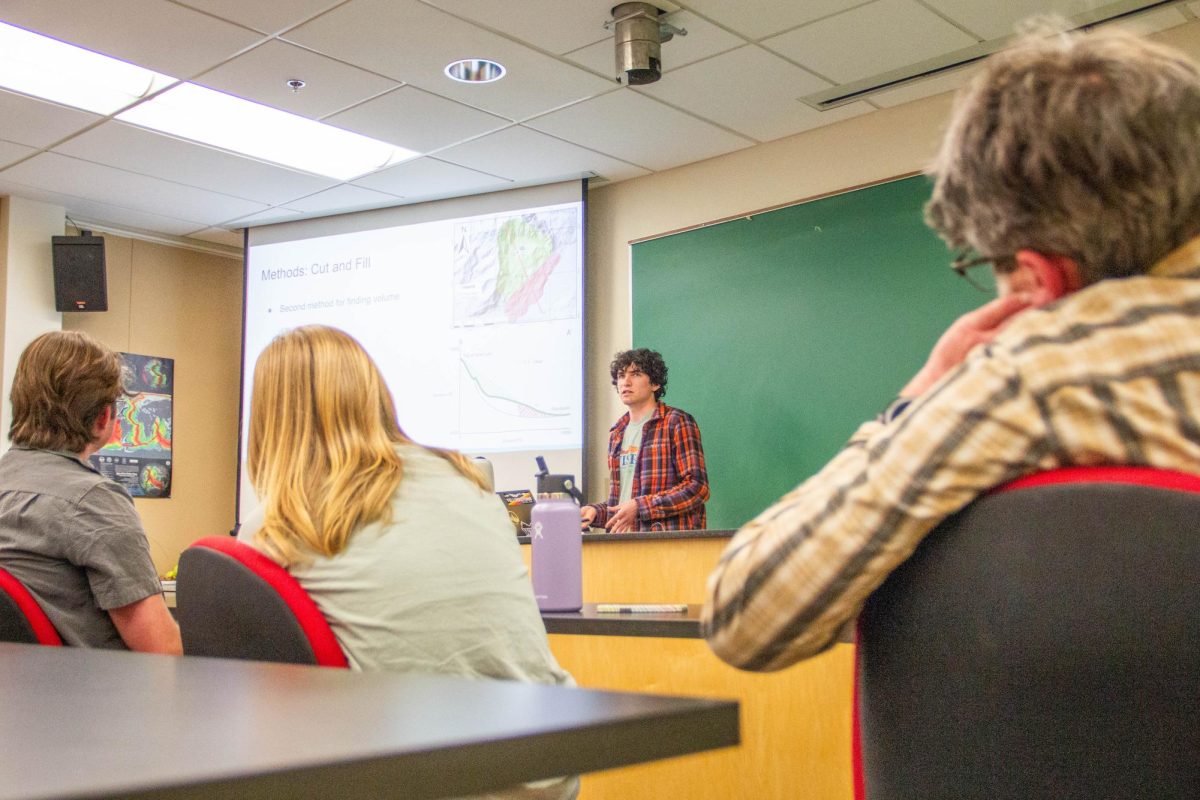
In her first semester at Whitman, Dr. Kue will teach two courses: Introduction to Public Health, which will provide a solid overview of and foundation for the discipline of public health, and Social & Individual Determinants of Health, an elective.
“[Students will] explore how the conditions people are born into and live in profoundly impact their health… [and] address the bigger questions around health equity,” Dr. Kue said.
Darta Sipola ’26, who served as a student representative on the committee to hire a Professor of Public Health, cites Dr. Kue’s commitment to research and her vision for collaboration with students as a main reason why she stood out as a candidate. As a senior Brain, Behavior, and Cognition major and recipient of the 2026 Thomas J. Watson Fellowship, Sipola reflects on the way her undergraduate research has been rewarding for her education, career and personal development, and expresses excitement for the public health program to provide important experiences for future professionals.
“I’m hopeful that Whitman graduates of the public health concentration will enter the workforce seeking to build trust with the populations they serve and work to heal some of the many public health crises facing the U.S. today,” Sipola said.
Kue plans to eventually offer a course in health literacy, something that roughly 90% of American adults struggle with when navigating health information and health care, often leading to more negative health outcomes. Through the course curriculum, she hopes to equip students with broader awareness of this issue and to increase understanding of the ways in which it can be mitigated through effective, community-informed communication.
Dr. Kue brings opportunities for students to get involved in real-world public health research, something not previously available at Whitman.
“Training the next generation of public health researchers and practitioners is a real priority for me. Students have gotten involved in all kinds of ways, including doing literature reviews on health disparities, collecting and analyzing qualitative and quantitative data, developing culturally tailored health education materials, engaging directly with community partners, co-authoring papers and even presenting findings at conferences,” Dr. Kue said.
According to Professor of Sociology Alissa Cordner, who serves as the chair of the Sociology Department and Director of the Public Health Program, murmurings of a public health program at Whitman have floated around amongst faculty for well over a decade. However, the initiative picked up steam during the COVID-19 pandemic, as the wide-stretching impacts of the virus highlighted the interplay of public health issues and disciplines taught at Whitman.
A key benefit of the program taking the form of a concentration is that it highlights the interdisciplinary nature of the public health field and plays on the strengths of Whitman’s curriculum, faculty and students. In addition to taking the classes, Introduction to Public Health and Seminar in Public Health, students must partake in coursework across three thematic areas: Statistics and Quantitative Reasoning, Health and Natural Sciences, Social and Cultural Determinants and Understandings of Health. Students will then have the opportunity to bring their studies beyond the classroom through a required experiential component of the program. This aspect could manifest in multiple forms, including through community internships with local organizations, campus engagement efforts or research projects such as those under Dr. Kue’s supervision. The concentration can be tailored towards any major or interest.
Ella Harrington is a second-year Biology major on the pre-health track, intending to pursue a career as a physician’s assistant or a pediatrician. Harrington is drawn to the interdisciplinary coursework and the opportunities for community engagement provided by the Public Health Concentration. She sees the program as one that would prepare her to be a better and more well-rounded practitioner, equipped not only with a knowledge of health and medicine, but also a deeper understanding of these issues’ structural causes.
“[The concentration] will help prepare me to treat patients at the clinical level while simultaneously addressing bigger picture health equity issues,” Harrington said.
Cordner highlights the Arts and the Environmental Humanities as two areas of study that students may not initially connect with the new program, pointing out the ways in which they can be compatible with the Public Health Concentration. Art, for example, is increasingly being used as a tool for community-based health education. Meanwhile, the humanities lay necessary groundwork for the critical evaluation of health texts and the improvement of both health communication and literacy.
“There’s tremendous potential, really, for synergies across any part of campus,” Cordner said.
The almost-universal application of public health goes beyond academia – nearly every headline and current event can be tied to public health in some way. Bombings, for example, cause immediate acute casualties and injuries, but they also have longer-term, less proximal harms to people and the environment. Explosions create far-reaching environmental hazards, exposing people to toxic pollutants and threatening food and water supplies. At the same time, conflict both reduces the availability of medical services and strains existing resources. This not only impacts those whose health issues are caused by warfare, but also those with preexisting diseases or chronic conditions.
Even seemingly unrelated events like increasing mortgage rates can be viewed through the frame of public health, Cordner said, because of the public health implications of housing access and policy.
“Think about all the things that determine whether people are healthy, from where they live, what they earn, what they eat, whether they feel safe in their neighborhood, what the air quality is like and what policies determine their access to care. So, if you’re studying economics, you’re studying a determinant of health. If you’re studying environmental science or political science, you’re studying other determinants. Even in fields like communication or sociology, the knowledge and skills you learn in those fields connect directly to how health information reaches people and whether it’s trusted,” Dr. Kue said.
Regardless of whether students are working towards their dream of becoming a doctor or simply exploring how they can use their interests towards the public good, Whitman’s Public Health Concentration will allow students a new way to customize their educational path and provide them with important skills for a critical and interdisciplinary evaluation of the world.