On Oct. 1 of this year the Trump Administration sent a nine-page compact titled Compact for Academic Excellence in Higher Education to nine major US universities. The proposal includes policies which further Trump’s stated agenda, such as capping the percent of students who can be on visa, reversing affirmative action and restricting the ability for university staff/administration to take part in “political speech”. Section two, which is titled “Market-place of Ideas and Civil Discourse,” alludes to political monoculture.
“Truth-seeking is a core function of institutions of higher education. Fulfilling this mission requires maintaining a vibrant marketplace of ideas where different views can be explored, debated and challenged.”
Since the Compact for Academic Excellence in Higher Education is only a proposal, some universities who have responded refused to participate in it. Others, however, are showing some agreement with the Trump administration, including interim president of the University of Southern California in a letter to U.S. Secretary of Education Linda McMahon.
“USC fully agrees that academic excellence cannot exist without a vibrant marketplace of ideas where all different views can be explored, debated and challenged. To foster such an environment at USC, we have committed ourselves to institutional neutrality and launched a number of initiatives designed to promote civil discourse across the ideological spectrum.”
For at least some of the universities who received Trump’s compact, the issue of dissenting voices on college/university campuses seems to bridge the political divide. It remains to be seen if the universities intend on implementing any of Trump’s more extreme suggestions.
“Transforming or abolishing institutional units that purposefully punish, belittle and even spark violence against conservative ideas.”
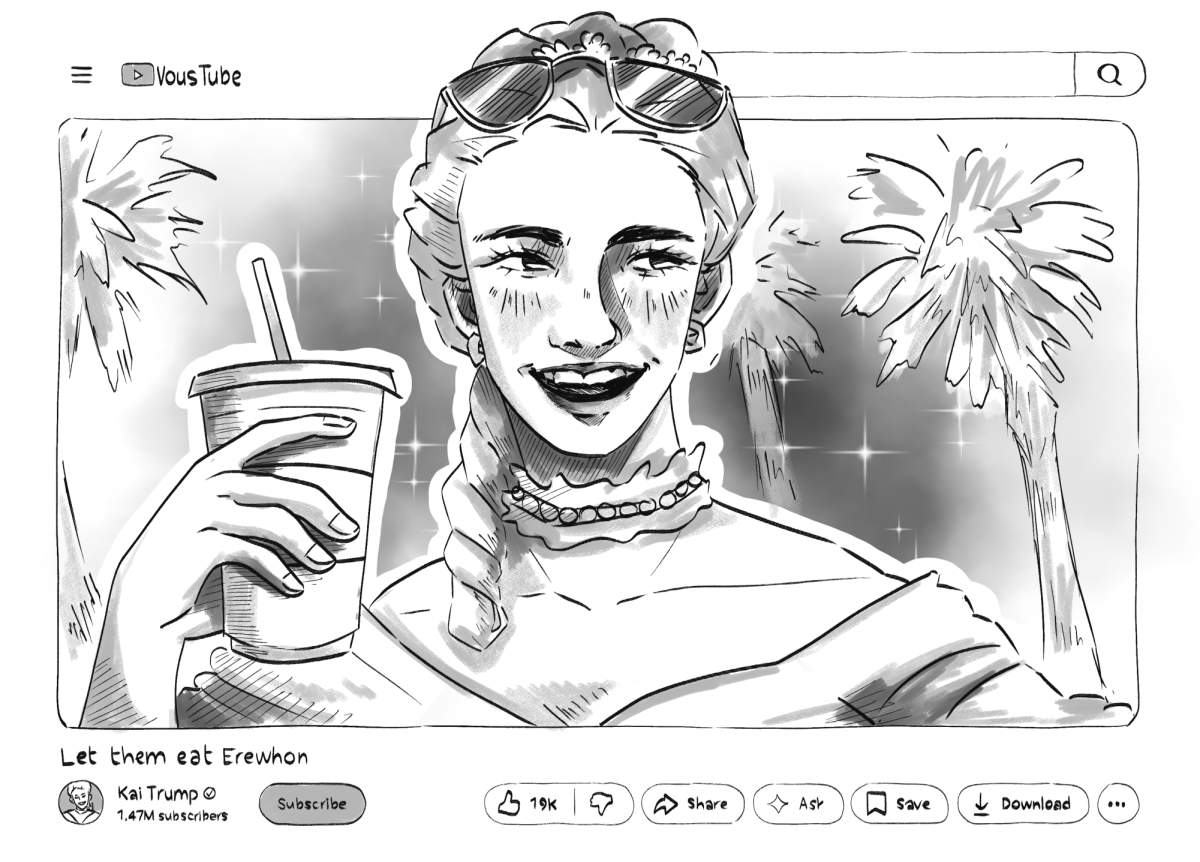
Ben Shapiro, Steven Crowder and others made careers off of this persecution narrative. In Crowder’s “Change My Mind” series, he would set-up a table on a college campus with a sign saying “X political opinion, change my mind” — some (in)famous examples being, “there are 2 genders changes my mind”, “male privilege is a myth change my mind”, etc. — he would then invite students or faculty at the college to come argue with him on video. These segments would then be edited into a compilation of clips (with dubious context) and upload the compilation on Youtube, often garnering millions of views.
What is also clear from the compact is that Trump is furthering the now decades old narrative that conservatives are censored on political campuses. While figures like Shapiro and Crowder have sensationalized the narrative of conservative persecution on college campuses, the animosity shown towards them in their videos is real. In the US, people who attend academic institutions are a majority left-wing. A 2024 survey conducted by the Challey Institute at North Dakota State University found that among surveyed students — 2,159 undergrads from 466 U.S. colleges and universities — that there were more than twice as many self-identifying liberal students than conservative students.
This majority isn’t necessarily the problem for the Trump administration, USC and many conservative Americans; instead, their problem is when treatment of conservatives goes beyond mere disagreement. The findings from the Challey Institute survey also seem to support this narrative: When compared to liberal students, conservatives were three times as likely to express that they were not comfortable sharing their political views on their respective college campuses.
To better understand the experience of having non-normative political views on Whitman campus, I interviewed senior Nico (pseudonym) about his experiences.
“I would say I’m barely conservative. I am not extreme, I’m more kind of middle of the road for conservatism, where I’m more of an independent, not too far to the right.”
Nico’s representation is fair. His political views represent a large portion of the American populace’s. However, Nico isn’t passively conservative, by his own explanation, he sees value in taking part in discourse with others.
“There’s kind of this ethos of what a college campus ought to be, especially in regards to considering a lot of viewpoints. I try to treat it as such where I try to debate as many people as possible, but people are stubborn.”
Many incoming freshmen or people imagining college seem to have a similar perspective, that a place like Whitman would invite civil disagreements and engage in respectful discourse. I certainly had a similar vision when I got to Whitman my freshman year. But, we all quickly learn that college is not some hallowed ground of discourse, but a place with normal people trying to get their education. And like everywhere else, political disagreement is often handled with very little poise.
Nico learned his freshman year how wrong his view of college ended up being. When he was open about his beliefs, naturally, many of his fellow freshmen found out. Upon finding out Nico differed from them, people spread his name around campus and he became a social pariah.
“It’s probably my social life, probably destroyed… I feel my name has been massively spread around where people assume I’m evil or something… And so it’s like, I can’t even bridge that gap ever,” Nico said. “I’ve been called racist. I’ve been called a whole lot of things.”
While it is trite to point out the ills of spreading rumors and gossip, the magnitude of something like this should not be overlooked. The college experience is multifaceted, and central to it is building connections with others. For Nico, a portion of Whitman students interact with him through an already solidified pretense that he need not be considered. While this is in its own right intensely isolating, the treatment of Nico by his fellow Whitties at times went beyond ostracization.
“[Other students] would put things specifically on my door, things they knew I didn’t believe in — I kind of just ignored it.”
For Nico and other people in his position, the temperature surrounding political disagreements has been gaining tension recently. In part people like him are blamed for the actions of the Trump administration. The moral comparison between a college student who has beliefs you disagree with and the billionaire in power’s governmental regime can only be described as absurd.
Beyond the Trump administration’s agenda, another notable event has recently reignited controversy regarding conservative political beliefs on college campuses — the murder of Charlie Kirk, a political pundit and founder of Turning Point USA, an organization which stresses advocating for conservative values on college campuses. I don’t bring this up to draw a false equivalence between the treatment of Nico and Kirk, but only to mention a broader collective awareness between the particular relationship of college campuses to conservative beliefs.
“Don’t just look at the surface, I would say, try to think more deeply. Don’t look at stuff that is basically one sided,” Nico said. “If you can think deeply and think outside of that… it would help. Try to go in with an open mind.”
It was clear in our interview that Nico recognized the difference between civil, impassioned, disagreement and the gossipmongering which he experienced; and that he fully advocates for the former. The issue with the story of Nico and many other conservatives on college campuses is how often disagreement goes beyond discourse — how often it clearly becomes bullying, othering and lacks the common courtesy that should be extended to our peers.
If you are going to take a hardline stance on how conservative students ought to be treated on Whitman campus, at least bite the bullet and acknowledge what you’re engaged in. You aren’t doing activism, organizing or praxis — stop the obvious equivocation. When you ostracize someone like Nico, the only thing you’re “fighting for” is an ingroup.