Black History Month initially emerged as a moment to teach people, particularly students and youth, about African Americans and their contributions to American society. Important stories went largely forgotten and on a national level, their narrative was neglected. Today, it is a time to honor and celebrate the legacy and continued presence of Black people across United States history and society, as well as an opportunity for people to engage with Black history in ways that go beyond the discussion of racism and slavery by highlighting Black leaders and their accomplishments.
Historically, the presence of Black students at Whitman has greatly impacted the college, from campus involvement in the Civil Rights movement to the founding of Whitman’s Black Student Union in the fall of 1968. The presence of Black students at Whitman continues to shape the campus and Black student-athletes, though small in number, do the same.
According to Whitman’s 2024-2025 Common Data Set, Black students make up 2.8% of the college’s student body. 0.9% of this subset are part of the school’s athletic department. For Black student-athletes at Whitman, participation in collegiate athletics is a meaningful symbol of presence.
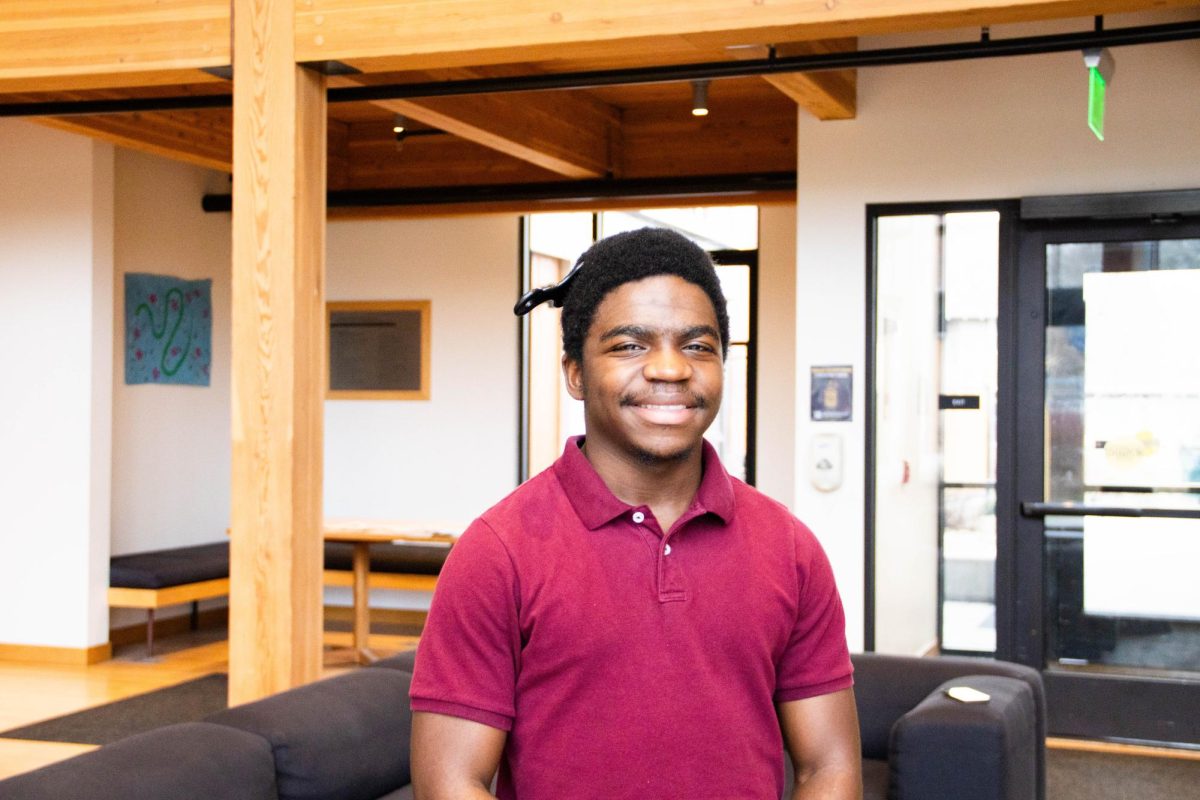
“It places a kind of flag,” first-year cross country and distance track athlete Micah Knight said. “It’s a flag for other minorities to see that, yes, this is an accepting environment. You can be yourself here because I am also myself here.”’
Especially at predominantly white institutions like Whitman, Black student-athletes overcome boundaries within a system where they often face racial discrimination, stereotyping and academic marginalization. Former Whitman student-athlete Cherokee Washington ‘17, who took a knee during the national anthem at a 2016 home volleyball game, knows this all too well.
“As athletes of color, our intersectional identities bring even more challenges that lie in untrue stereotypes, racist experiences and systemic, archaic barriers that other student-athletes simply do not face, both in the classroom and on the court,” Washington said in an email to The Wire.
Community connection empowered Washington to overcome these obstacles, both at Whitman and beyond.
“Community is the biggest source of strength, love and power that allowed me to overcome any obstacle I faced,” Washington said. “Community is an ancestral superpower within so many of our cultures as Black and brown folks, and it can serve as a life force for many of us to face any barrier we meet head-on with dignity.”
For Washington, Black History Month is a chance to honor her Black community, both past and present.
“Black history is a moment of reflection and gratitude to my ancestors who were forced into enslavement and yet found a way to survive and create a new reality for those of us living now,” Washington said. “It’s a love letter to all Black people around the world who share the same love and joy for being black and beautiful.”
As for Knight, Black History Month is a time to express his culture to the fullest.
“It is very important to be in touch with who you are because it’s who you are that shows where you’ve come from,” Knight said. “All of your ancestors, all of your coaching and things that have passed down, traditions — those things make up a person, and not being whole, not knowing about it, makes you somebody incomplete.”
Knight aspires to become a leader for the cross-country and distance track teams.
“I want to make sure the team is still going, even after I’m gone, with positive lives. And [to] make sure that we have more members, more groups and that everyone who visits sees us and says, ‘I want to do that,’ and want to commit themselves fully,” Knight said.
Whitman’s Division of Inclusive Excellence leads the college’s diversity, equity and inclusion and community-building efforts. NiQo Bullock, assistant dean of students and director of Student Activities, Involvement and Leadership, explained how New Student Orientation provides athletes with a solid community foundation for future competition.
“New Student Orientation is an important time for incoming students to meet their fellow classmates and learn of all of the readily accessible resources and programs on campus,” Bullock said in an email to The Wire. “Athletes are required to prioritize participation in the orientation experience over involvement in competition to ensure they are given the same tools and acclimation points as their peers. Being a student athlete is a major commitment, and we want our students to be adequately prepared to perform in their respective crafts as well as explore new opportunities that can reveal passions, perspectives and affinity identities.”
As these athletes continue to compete hard day in and day out while persevering through systemic barriers, Black History Month spotlights their presence and accomplishments.