
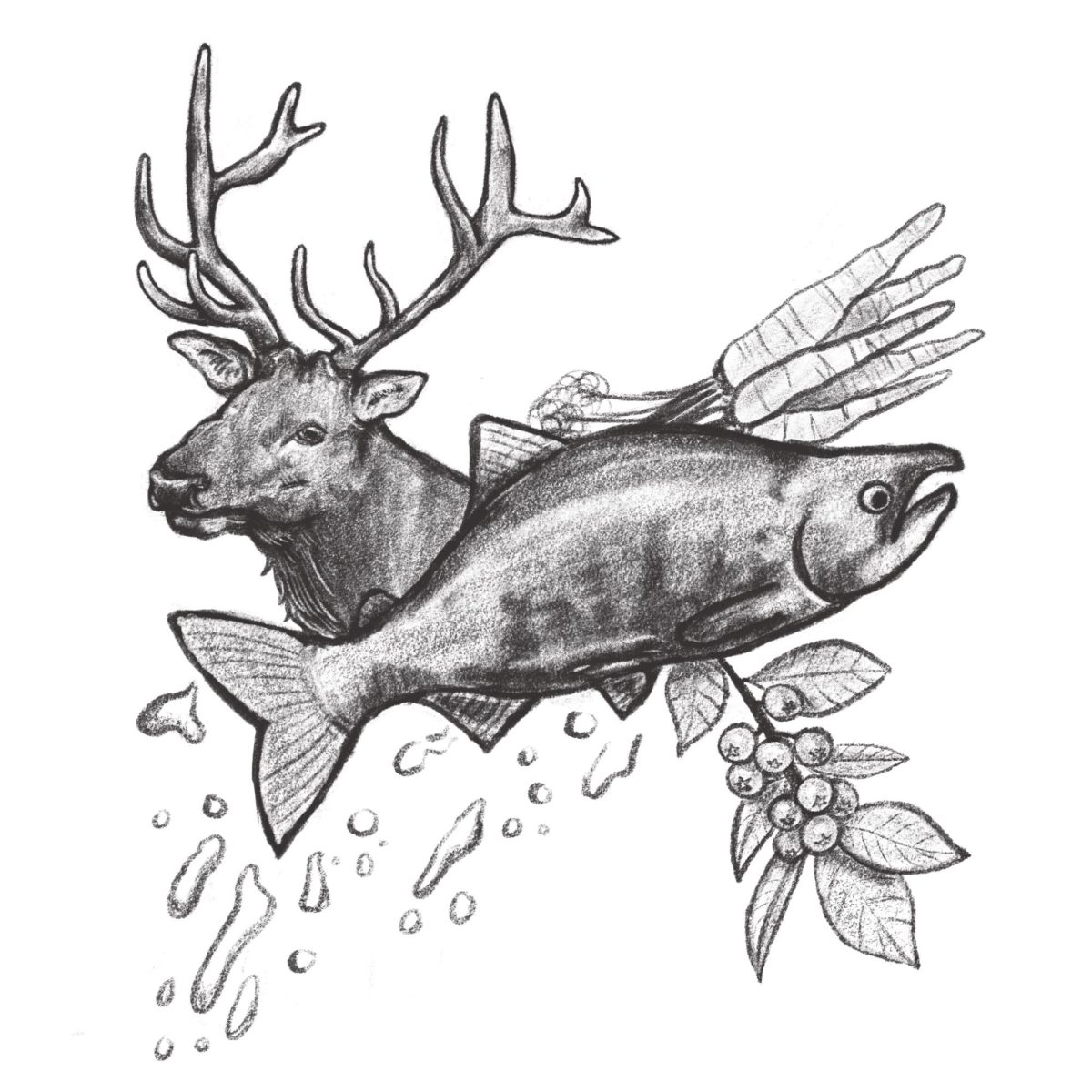
The 2025 First Foods Festival at Whitman College brought renewed attention to tribal land rights, ecological stewardship and the ongoing fight to protect sacred Yakama Nation sites. Held on Nov. 8, the festival invited Indigenous leaders, students and regional advocates to discuss “These Sacred Hills,” a documentary examining the threatened Pushpum Ridge area.
The annual festival, organized through Whitman’s Native American Outreach office, featured a film screening and panel addressing the Goldendale Pumped Storage Project. The project proposes a large-scale energy development and is largely opposed by tribal nations and regional environmental groups. The film underscored a pattern of the federal government dismissing the Yakama Nation’s concerns regarding land-use decisions.
“It was difficult to know that this is something that’s happened recently, and the county was aware, the state was aware, … but they were not consulting with the tribes,” said Althea Huesties-Wolf, acting First Foods Policy Program Manager for the Confederated Tribes of the Umatilla Indian Reservation (CTUIR) and an Adjunct Professor at Whitman. “Native tribes as sovereign nations continue to be ignored in the process.”
The Goldendale Pumped Storage project would destroy Pushpum, which is a primary location for the Yakama Nation to gather roots and traditional medicines. Huesties-Wolf stressed the role that First Foods like plant roots play for the CTUIR.
“For Columbia plateau tribes, the land is our religion. When we die … the first foods are right next to you, and they are that conduit in that testimony for the life we lived to get us to the next life to join our ancestors,” Huesties-Wolf said.“They are [also] very important for habitat. The habitat keeps our environment clean.”
Special Assistant to the President for Native American Outreach Jeanine Gordon, an enrolled CTUIR member, said the event was part of Whitman’s commitment under its Memorandum of Agreement with the CTUIR.
“I really hope that people come away from attending an event like that with a deeper and broader understanding of why we feel it is so important to bring these initiatives to … governments to protect lands [and] cultural traditions that go back hundreds and hundreds of years,” Gordon said.
Gordon reflected on the importance of understanding environmental stewardship as students and the role she believes the festival plays on campus.
“I hope that it sparked some awareness and interest so that students will keep exploring initiatives around the environmental studies, sociopolitical studies [and] governmental studies.” Gordon said.
Huesties-Wolf said Whitman is trying to incorporate tribal-authored documents. One document — the CTUIR Climate Adaptation Plan — responds to climate change impacts on the Tribes’ cultural resources and First Foods, like salmon, deer and roots. According to Huesties-Wolf, plans like this prepare students for responsible work beyond campus.
“It just brings another perspective … so when [students] enter the workforce, they’re aware, and they’ve been educated on what kind of responsibility they should have in their field of work,” Huesties-Wolf said.
Environmental advocates who attended the First Foods Festival felt that the screening offered a rare platform to explain why the Goldendale Pumped Storage project has been repeatedly contested.
“This site has been consistently targeted … for a storage proposal by developers, despite tribes voicing concerns about building here,” said Simone Anter, an attorney with Columbia Riverkeeper.
The location has been under pressure by various developers as well as state and local governments since 2009. Currently, the project developer in this area is Rye Development, a Florida-based company involved in many pumped storage projects throughout the US.
Anter further explained that the project specifically impacts Indigenous people and their practices which use the land as a sacred site.
“The bottom line is the most significant risk here is the destruction of a sacred site,” Anter said. “Tribal nations have had to publicly identify and share so much information that frankly non-tribal people don’t need to know […] in order to protect it.”
Anter also explained how the federal consultation process is flawed, leading to inaction from federal agencies when tribal objections arise.
“It is an exercise in checking the box and there are no real repercussions for not meaningfully engaging with tribes,” Anter said. “True collaboration must include free prior and informed consent.”
Anter argued that keeping areas such as Pushpum in the forefront of environmental discussions is essential in moving forward to creating a sustainable future.
“If we’re placing value on the land as a place that’s rich in cultural history … then protecting it becomes of the utmost importance,” Anter said.
She added that “green energy” cannot be considered green if it destroys irreplaceable cultural sites, as the Goldendale project would impact Pushpum if the proposal goes through.
The film and festival at Whitman, as Huesties-Wolf explained, made some of these issues visible through the First Foods tradition.
“As Indigenous people, we recognize nothing stays the same, but we should always be planning to adapt and be resilient … it’s been an uphill battle nonstop,” Huesties-Wolf said.
As Whitman looks ahead to next year’s programming, organizers and participants hope the conversations sparked by “These Sacred Hills” continue beyond campus and into policy, advocacy and community action.


Captain Crack Sparrow • Nov 24, 2025 at 8:03 pm
So sad how the county of Klickitat is destroying Indian sacred land for money, example is the landfill area, they don’t care and the sheriff loves the environmental impact