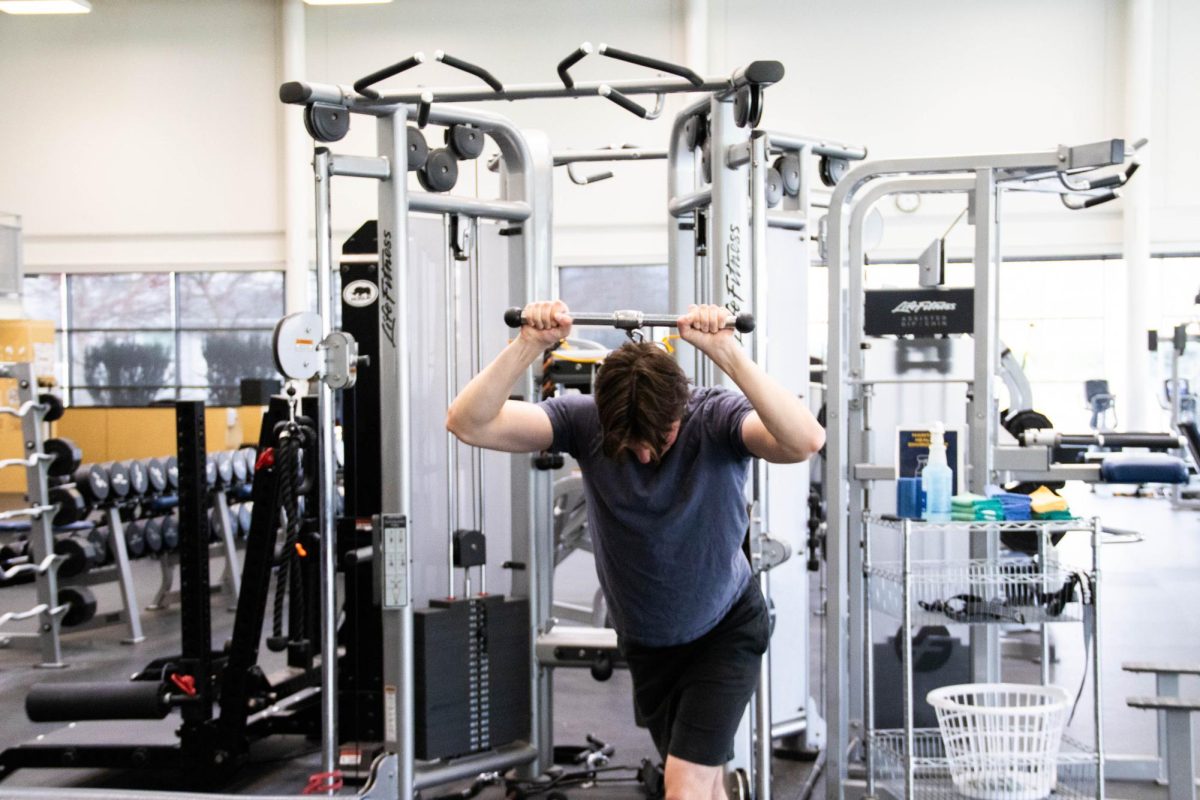
On any given afternoon inside the Baker Ferguson Fitness Center (BFFC), the rhythm of Whitman College’s gym culture is easy to spot. The steady hum of the treadmills and the constant chatter by the squat racks create a familiar environment. For many on campus, the gym is more than a place to work out. It’s a space where friendships grow and students learn habits that extend far beyond athletics.
Whitman’s Director of Sports Performance, Jocelyn Awe, sees the gym as a rare campus environment where different corners of the community come together.
“I would say [the gym culture here is] friendly, inviting [and] motivating because you have everybody from retirees, professors, students, faculty, staff, civil servants and their families,” Awe said. “We’re all in this together, going through stuff and still trying to take care of ourselves at the same time.”
The BFFC, which opened in the fall of 2006 alongside Harvey Pool, is designed to give Whitman a dedicated space for strength training and general fitness separate from Sherwood Athletic Center’s competition and recreation facilities. Even with Sherwood available nearby, the addition filled a gap on campus by creating a centralized exercise space open to the broader Whitman community.
Unlike many college gyms that are dominated solely by athletes, Whitman’s weight room often mixes varsity teams with students working out between classes or professors squeezing in a lift before heading back to their offices. That mix helps create a space where encouragement replaces competition.
Awe also emphasized that training isn’t only about performance in sport but also about building habits students can carry with them long after graduation.
“I’ll work as hard as they want to work,” Awe said, referring to working with student-athletes specifically. “I build a relationship with [you] where we’re working with each other… and I’m teaching you how to train for life too, not just your sport. So, when you graduate, you know what you’re doing and don’t feel lost.”
For many Whitman students, the gym is an anchor in the often unpredictable rhythm of college life. Sophomore Max Colon says his workouts are built around something simple: routine.
“I have a schedule and a group to go with,” Colon said. “I always go with the same friends at the same time.”
That routine helps create a sense of accountability, turning workouts into a shared ritual rather than a solitary task. Colon also noted that Whitman’s gym served as an approachable introduction to weight training.
“I think it’s great,” Colon said. “Last year when I was sort of first coming into a real gym, I thought it was a great place to start.”
For others, the gym is less about social activity and more about personal space. Sophomore Rebecca Mize believes that BFFC’s welcoming environment allows people to focus on their own goals while still feeling supported.
“I’d say everybody seems to be doing their own thing, really,” Mize said. “Everybody’s nice if you ask them questions or anything.”
That balance — independence paired with quiet encouragement — has become a defining feature of Whitman’s fitness culture. Students may not always work out together, but they share the same environment and the same understanding that the gym can be a refuge from academic stress and burnout.
“I feel like a lot of the time, it’s really hard to find motivation,” Mize said. “So, honestly, I just try to rely on discipline instead … without the gym, I don’t feel normal. It helps reset my mind and it’s a little break from school.”
For Awe, those moments of personal growth are just as meaningful as athletic achievements. The weight room, he says, is a place where students learn patience and consistency — qualities that apply to many activities besides physical fitness.
Even short, regular workouts can build those habits over time.
“Once you start getting in a habit, the consistency is king,” Awe said. “Like we like to say, violent consistency beats out everything else.”
That philosophy has shaped how Whitman’s sports performance program approaches training. Rather than focusing only on results, Awe encourages students to recognize the gradual changes that come from showing up regularly and pushing through difficult days.
In a campus environment filled with deadlines and packed schedules, the gym has quietly become one of Whitman’s most reliable gathering spaces. Some students stop by for quick lifts between classes. Others linger, stretching or chatting long after their workouts end.
What emerges from that shared space isn’t just stronger athletes or more disciplined gym-goers, but also a culture built on support and the simple act of showing up.