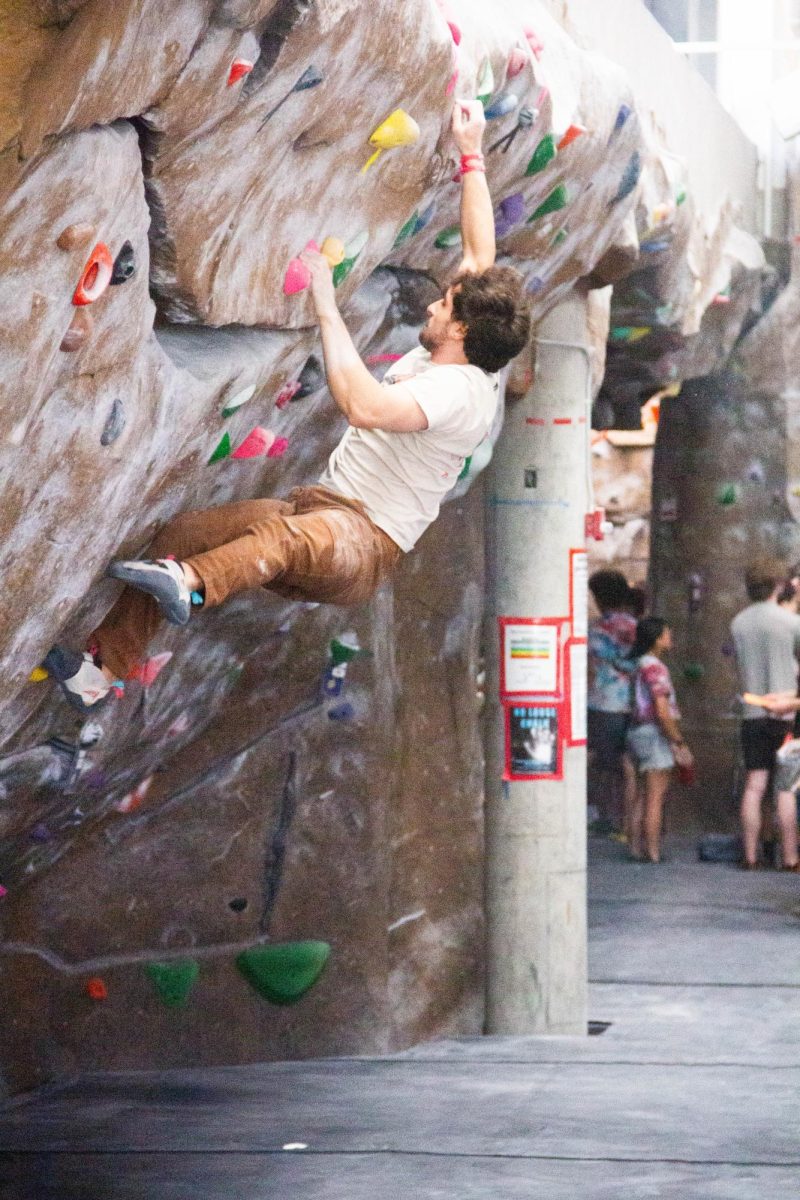
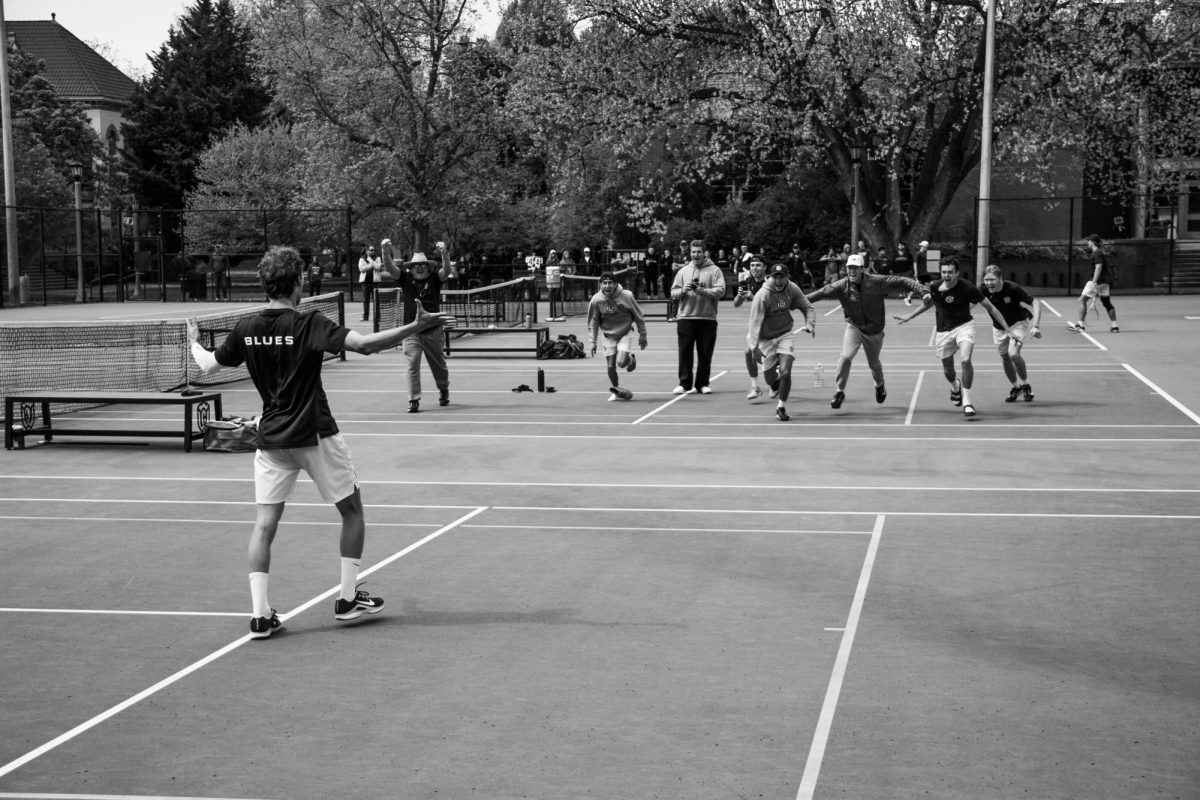
At Whitman College, the success of student-athletes doesn’t begin or end on the court — it starts in the weight room and training center. Behind every sprint, swing and serve, there’s a team of dedicated professionals working to keep athletes strong, healthy and performing at their best. Led by Director of Sports Performance Jocelyn Awe and athletic trainers John Eckel and Anna Doyel, Whitman’s Sports Performance and Athletic Training departments form the foundation of the college’s athletic excellence.
Awe, who oversees strength and conditioning for Whitman’s varsity teams, takes a highly individualized training approach. Each program starts with a “needs analysis”: understanding what kinds of physical demands athletes face, how long they compete and what types of movements are most critical.
“For soccer, it’s a lot of repeated sprints but also endurance for 90 minutes,” Awe said. “Volleyball, on the other hand, is much more anaerobic — short, powerful bursts. So, we build around that.”
Beyond sport-specific training, Awe prioritizes general athleticism, ensuring that players have the strength and stability to stay healthy throughout the season.
“For overhead sports [like volleyball or basketball], you need shoulder strength to maintain form and prevent injury,” Awe said. “For rotational sports like golf or soccer, hip strength is key to avoid groin issues.”
Awe also designs workouts around each team’s current needs, be it building foundational strength or developing power and speed. For individual athletes, history matters — especially when it comes to past injuries.
“If someone else walked in and said, ‘Why isn’t that person back squatting today?’ I can say, ‘Well, they had back surgery four years ago,’” Awe said. “I remember all of that.”
Junior soccer player Kat Sand said that attention to detail shows up every day in the weight room.
“Jocelyn makes lifting way more enjoyable,” Sand said. “He’s encouraging but never overbearing … he knows when to push us and when to scale back. It feels like he really understands what our bodies are going through during the season.”
This personalized attention extends beyond the gym. Awe often creates additional workouts for athletes to complete on their own time, helping them stay motivated and consistent. However, he understands that not everyone shares his passion for lifting.
“Not everybody loves lifting as much as I do,” Awe said. “They love their sport. So I try to keep things fun … [and] switch it up when it gets monotonous. … It’s about keeping them engaged.”
Awe’s coaching style centers on trust and open communication rather than rigid discipline.
“I’m not a ‘rah-rah’ coach,” Awe said. “If someone tells me they’re not feeling it today, we’ll adjust. That way, when I do need to push them, they trust me.”
For athletes like sophomore volleyball player Nadia Shepherd, that trust extends beyond performance training to recovery. Shepherd sustained a nerve injury that required daily treatment and close monitoring by athletic trainer Anna Doyel.
“Every day, I’d come in and talk to Anna about how it was going,” Shepherd said. “She’d ask what had changed, what was helping and she’d tape my hamstring or show me new stretches. She was always checking in and following up.”
Doyel explained that this kind of ongoing communication is central to Whitman’s athletic training philosophy.
“The long-term health and safety of each student-athlete is the top priority,” Doyel said in an email to The Wire. “The most important thing is to talk with the student-athlete about the injury they have sustained and the return-to-play process. After an injury, athletes are only returned to play once they have shown that they … will be safe participating in their sport.”
Consistent, hands-on care from Doyel and Eckel allows Whitman athletes to return to play safely, often with a greater awareness of how to prevent future injuries. Shepherd noted that the training staff’s education-first approach has made a lasting impact on her team’s health.
“Shin splints were prominent on our team,” Shepherd said. “The trainers showed us things to do to prevent them. It’s helped us stay in the game and keep playing when our coach needs us.”
Sand added that the trainers’ presence has changed the team’s mindset about recovery.
“They’ve taught us that taking time in the training room isn’t a setback … it’s part of getting better,” Sand said. “You can tell how much they care because they’re so consistent. They remember what you’re dealing with and always ask how you’re doing, even days later.”
Awe shared that view, describing his department as “a manager of stressors.” Between academics, athletics and college life, he tailors training to fit into students’ schedules without overwhelming them.
“We focus on effort … how much can we really put in today? We come in, do what we need to do and get out. It’s got to be flexible,” Awe said. “We’re all here for the same reason; to help these athletes stay healthy, stay motivated and keep getting better.”
That efficiency and empathy define Whitman’s approach to athletic performance. The collaboration between Awe’s strength program and the athletic trainers’ rehabilitation expertise ensures that every athlete, regardless of their sport or injury history, gets the care and attention they need.