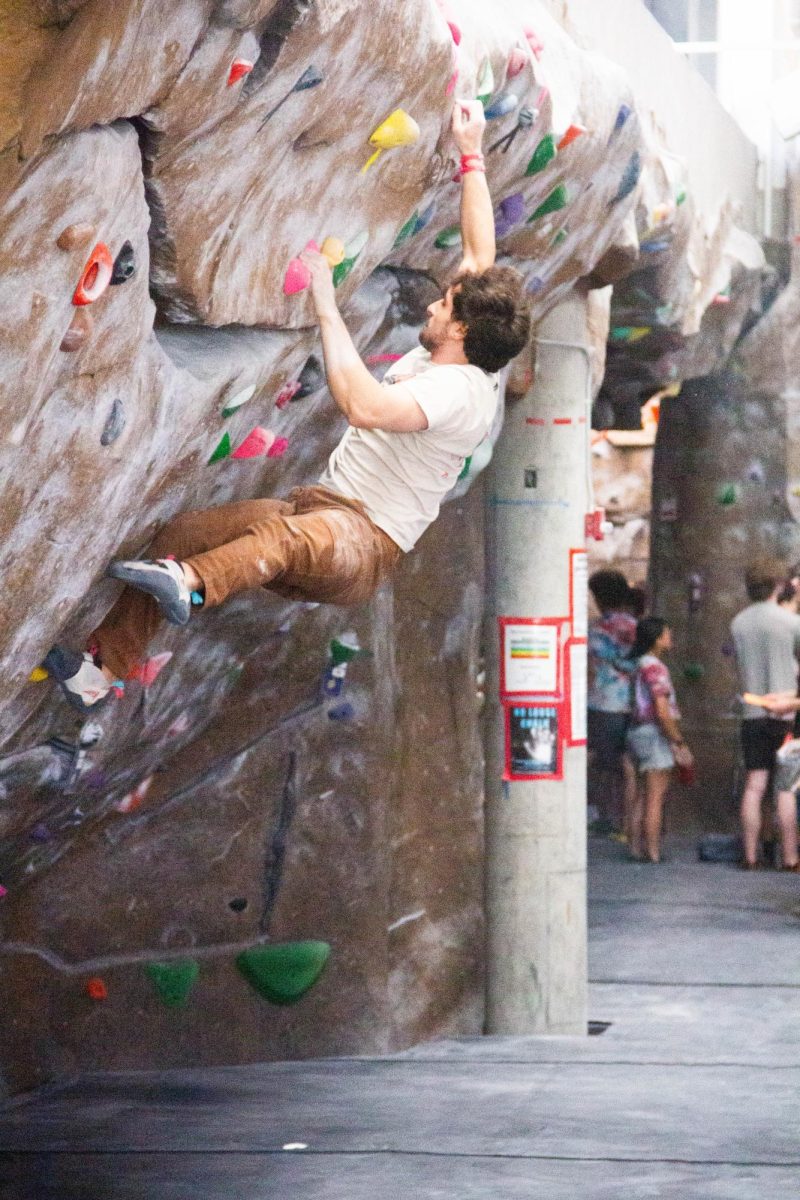
When people think of college athletics, it’s often the varsity programs that come to mind. Packed stadiums, rigorous training schedules and the prestige of competing at the highest level. But across campuses, another kind of athletic experience is thriving — intramural and club sports. These spaces give students a chance to stay active, meet new people and build community without the intense demands of varsity life.
For senior Will Steinhacker, a member of the Intramural (IM) Committee, the sense of connection that intramurals foster has been central to his college experience.
“It’s been a really good way to stay connected with people and branch out,” Steinhacker said. “I’ve had the opportunity to meet a lot of people I maybe otherwise wouldn’t have and to set things up in a context that’s loose and fun, [so that] people feel comfortable expressing themselves.”
Intramurals, Steinhacker explained, strike a delicate balance between competition and recreation.
“Sports are competitive, and people want to be competitive,” Steinhacker said. “There are people that have been playing their whole lives and are looking for a way to continue. … [We] have people remember that although it’s fun to compete and do well… there’s people here that have less experience or are there just to have fun, and there’s a balance that needs to be struck.”
To that end, referees oversee the most competitive games to keep things fair and ensure a welcoming atmosphere.
For students considering intramural sports, Steinhacker offered a simple pitch.
“If there’s any sport you’ve ever considered trying, or one you want to pick back up… there isn’t a better avenue to do it than intramural sports. … Everyone’s looking to have fun and bring each other up. It’s a great way to meet new people and get involved in the community,” Steinhacker said.
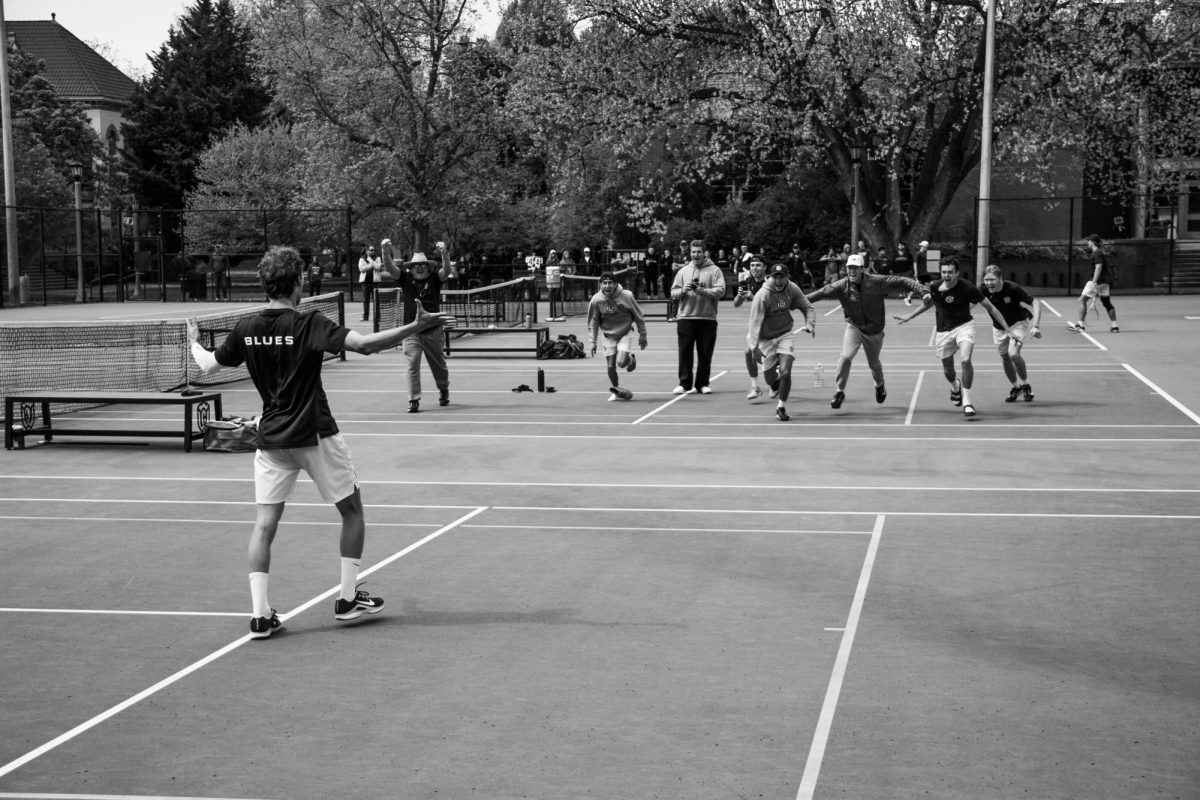
That sense of balance also resonates with sophomore Julius Kozisek, who captains Whitman’s club tennis team. Like many students, he initially joined to find a place of belonging.
“When I first got here, it was one of the few places where I could come regularly and not feel a lot of social pressure,” Kozisek said. “It was a great place to socially acclimate and meet new people.”
Now, as a leader, Kozisek sees his role as bigger than just playing matches.
“I love to play tennis [and] I love to be competitive,” Kozisek said. “But my job here, the thing I volunteered to do… was to be a captain. So that’s supporting people around me, giving away my racket when it’s needed. That’s my job. That’s what I’m here for.”
The appeal of club tennis, Kozisek noted, extends beyond skill level.
“It’s a really great place to meet people, even if you don’t play tennis,” Kozisek said. “There are all skill levels. You meet people that are good enough to be on the varsity team… But I think there are few clubs this big, and few clubs this relaxed and fun.”
Behind the scenes, though, building and maintaining robust intramural and club programs isn’t without its challenges. NiQo Bullock, Whitman’s assistant dean of students and director of student activities, has overseen countless student organizations at Whitman. For him, club sports provide an essential middle ground between intramural and varsity sports.
“Club sports provide the opportunity for those that are interested in and playing sports at the next level,” Bullock said. “They may not want the full commitment of varsity sports, but they still want to be able to engage in the sport.”
Still, sustaining those communities takes work.
“The most common challenge is succession plans,” Bullock said. “People go abroad, people graduate, don’t check their emails after transitioning from the college. When a succession plan is not established and incoming leadership comes in, they may find they’re jumping into something that has high standards, which can be a daunting challenge, and… that’s why a lot of clubs may fall under because they don’t know who to talk to or where to pick up from.”
Bullock advises students hoping to build long-lasting programs to think of their team like a family.
“With a family, as people from different walks of life, all that can be a lot to manage, but when properly considered and structured, [it] can lead to a vibrant and uniquely expressive team,” Bullock said. “The key to having a successful club sports team is to remember everyone has an opinion and role to play, to be as considerate and as accommodating as possible, and to play to everyone’s strengths while covering areas of improvement. … Everyone needs to feel valued and appreciated.”
That sense of shared value is what sets intramurals and club sports apart from varsity athletics. Prestige may fuel varsity competition, but for students like Steinhacker and Kozisek, passion drives their experiences.
Whether it’s organizing games for friends, supporting teammates on the court or building a sustainable club community, these student-athletes show that sports can mean far more than scores and standings. For many, they’re about belonging, growth and the joy of playing simply for the love of the game.